Ready to List Your Warehouse? A 5-Step Checklist to Attract More Business
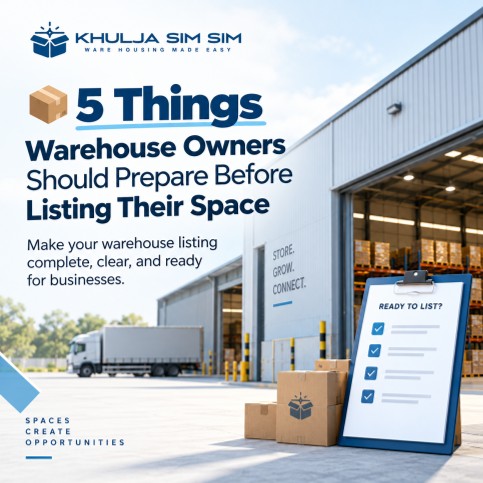
Listing your warehouse online is one of the easiest ways to increase visibility and connect with businesses looking for storage and fulfillment solutions.
However, a warehouse listing is only effective when it provides the information businesses need to make decisions quickly.
A complete and accurate listing helps build trust, reduces unnecessary inquiries, and improves the chances of attracting the right customers.
Before publishing your warehouse on Khulja Sim Sim, use this simple 5-step checklist.
1. Add the Exact Location
Location is one of the first things businesses evaluate when searching for warehouse space.
Make sure your listing includes:
- City and state.
- Industrial area or locality.
- Nearby highways or transport hubs.
- Access to major logistics routes.
Clear location details help businesses determine whether your warehouse fits their supply chain requirements.
2. Specify the Available Area
Businesses need to know how much space is available before considering a warehouse.
Include details such as:
- Total warehouse area.
- Available storage area.
- Expansion capacity if available.
- Storage configuration and layout.
Accurate space information helps businesses find warehouses that match their operational needs.
3. Highlight Key Warehouse Specifications
Every warehouse is different. Sharing facility specifications helps businesses understand whether your warehouse is suitable for their products and operations.
Consider including:
- Warehouse type.
- Storage capabilities.
- Loading and unloading facilities.
- Floor load capacity.
- Security systems.
- Power backup availability.
- Temperature-controlled features if applicable.
The more relevant information you provide, the easier it becomes for businesses to evaluate your facility.
4. Include Access and Operating Details
Operational information helps businesses understand how the warehouse functions on a day-to-day basis.
Important details include:
- Operating hours.
- Vehicle access.
- Loading dock availability.
- Material handling capabilities.
- Entry and exit procedures.
- On-site support services.
Clear operational details help avoid misunderstandings and improve decision-making.