Flexible Warehousing: Why Your Warehouse Space Should Adapt to Your Supply Chain
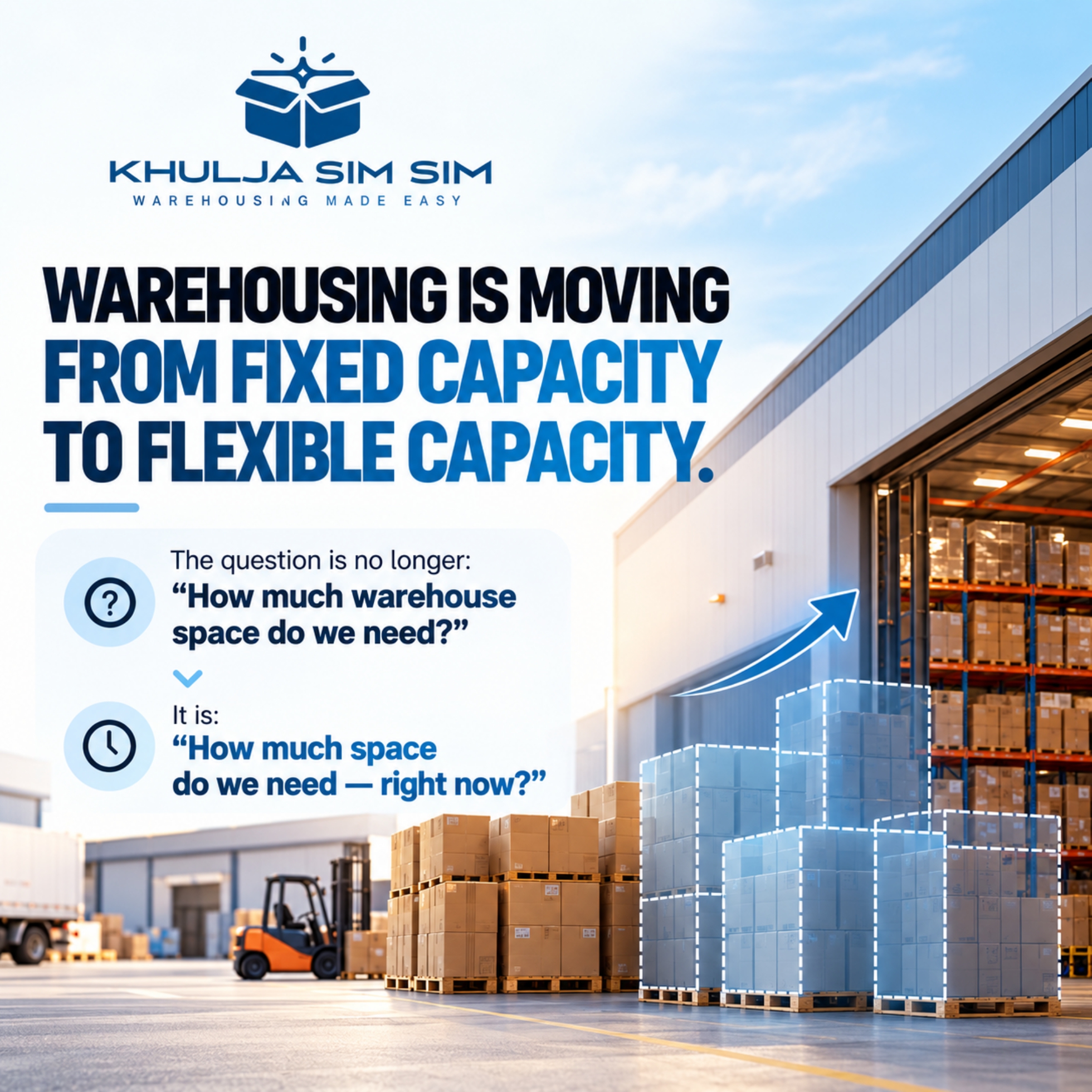
The modern supply chain isn't static—so why should your warehouse space be?
Demand changes. Seasonal spikes come and go. New markets open. Your storage requirements can change along with them.
For businesses operating in a dynamic market, having the right amount of warehouse capacity at the right time can become an important part of the overall supply chain strategy.
Fixed Capacity Can Become a Constraint
Traditional long-term leasing can provide businesses with stable warehouse capacity.
However, business requirements don't always remain the same.
During periods of lower demand, businesses may have more space than they need. During seasonal peaks or expansion periods, they may need additional capacity.
This is where flexibility can become valuable.
Flexible Warehousing Complements Traditional Leasing
Flexible warehousing doesn't necessarily replace traditional warehouse leasing.
Instead, it can complement an existing warehouse strategy by providing additional capacity when and where it is needed.
Businesses can use flexible space to respond to changing operational requirements without relying entirely on fixed-capacity arrangements.
Scale With Demand
Demand can change throughout the year.
Seasonal campaigns, promotional periods, inventory increases, and other business cycles can create temporary requirements for additional warehouse space.
Flexible warehousing can help businesses respond to these changes by providing access to additional capacity when required.
Support Expansion Into New Markets
Entering a new market can create new storage requirements.
Instead of immediately committing to a large permanent facility, businesses can explore flexible warehouse options as they establish their operations and understand local demand.
This can provide greater flexibility while expanding into new locations.
Adapt Where and When You Need Space
The value of flexible warehousing isn't only about having more space.
It's about having the ability to adapt warehouse capacity to changing business requirements.
Businesses can consider flexible capacity when they experience:
- Seasonal demand
- Inventory growth
- New market expansion
- Temporary storage requirements
- Changing fulfillment needs
How Khulja Sim Sim Helps
Khulja Sim Sim connects businesses with warehouse space that can support changing storage requirements.
Whether a business needs additional capacity during a demand spike or wants to explore warehouse options in a new market, flexible warehousing can provide another option alongside traditional leasing.
Is Flexible Warehousing the Next Shift in Logistics?
As supply chains become more dynamic, businesses may need warehouse strategies that can adapt with them.
Flexible warehousing provides an approach where capacity can complement traditional leasing and respond to changing demand, seasonal requirements, and market expansion.
Khulja Sim Sim — Opening the doors to flexible warehousing.